
Specify the purchase duty
A polymer for geotextile-tube dewatering must be evaluated with the sludge and the intended fabric system. Settling alone cannot demonstrate drainage or particle retention through that medium. Coordinate the flocculant comparison with the dewatering-system supplier rather than buying a general sludge grade on description.
Keep the wastewater source, supplied product identity and required separation result together. An application name narrows the enquiry but does not establish a universal grade or dose.
Identify slurry and system conditions
Record source, solids concentration, particle character, relevant contaminants, upstream chemicals and the planned pumping and filling route. Obtain fabric and project constraints from the responsible system team.
A small sample from a favorable settling layer may exclude the fines that control filtrate quality during actual filling.
Use fabric-relevant screening
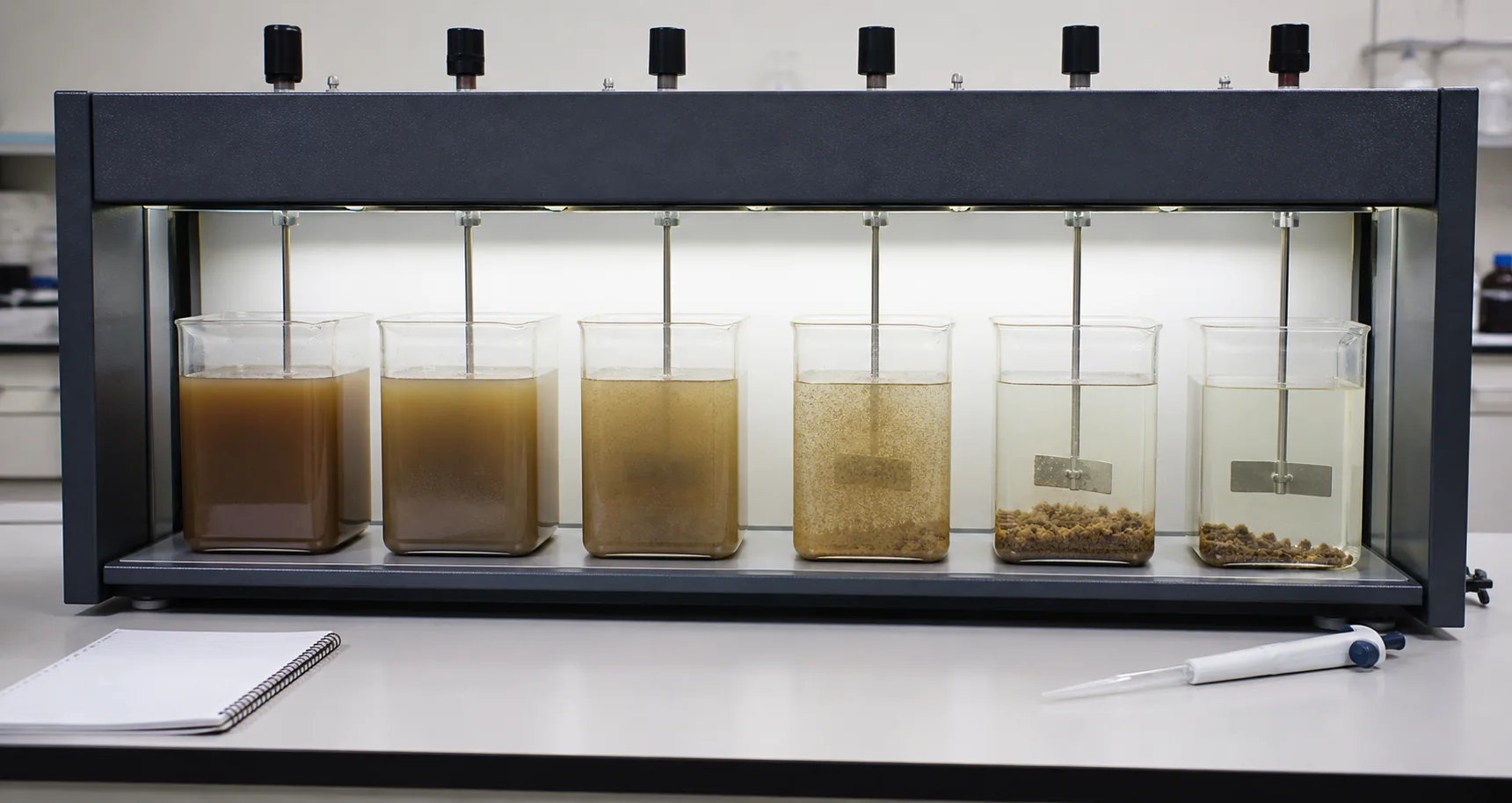
Compare coded candidates under controlled preparation and conditioning, using the appropriate drainage or fabric test. Measure filtrate quality and water release, not only visible floc.
The controlled screening record supports sample identity and dose accuracy; it does not replace the system-specific retention test.
Define the pilot and commercial boundary
Confirm practical injection, relevant fill cycles and the required solids and liquid endpoints in an agreed pilot scope. Include drainage collection and disposal or reuse responsibilities.
Laboratory performance is not a tube-sizing, structural-design or unrestricted discharge guarantee. Preserve those separate project approvals with the purchase plan.
Read a conflicting trial result
A candidate may release water quickly but carry fine solids through the selected fabric. Do not choose it solely on drainage speed; repeat at the accepted liquid-quality and retention conditions.
Repeat the reference and leading conditions when differences are close to sampling or measurement variability. Keep untested conditions visible in the qualification rather than extending one favorable observation.
Agree the acceptance record
| Buying check | Evidence | Acceptance |
|---|---|---|
| Slurry | Source and fine-particle context | Representative feed |
| Fabric | Drainage and filtrate evidence | Actual retention duty |
| Pilot | Fill and collection arrangements | Project scope verified |
Retain the coded sample, preparation, active basis and measurement timing. Preserve failed conditions alongside the accepted range so later deliveries can be compared with the actual evidence.
Request the relevant sample or offer
Send slurry results, proposed fabric or system, handling route and project targets. Request a coded trial coordinated with the equipment supplier and an explicit plant or pilot confirmation stage.
Send the flocculant sample and quotation request and review product and supply requirements with Gongyi Xinqi Polymer Co., Ltd.. Confirm the offered identity, documents and commercial scope before ordering.