
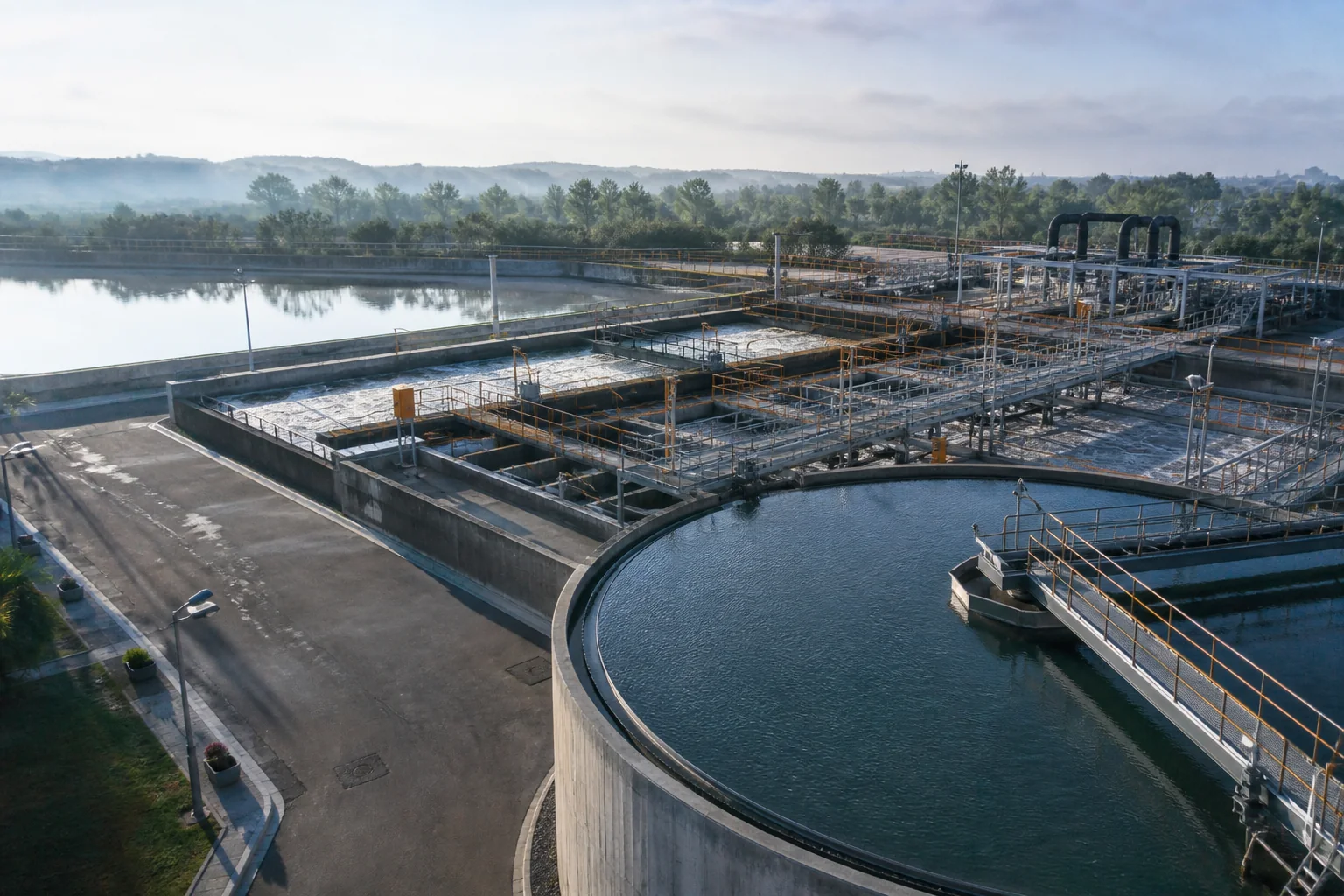
Define the separation duty
State the wastewater source, candidate selection, separator and downstream process before comparing polymers.
The same wastewater treatment flocculant can behave differently in settling, flotation and dewatering equipment.
Preserve a representative sample
Record sampling point, production state, pH, temperature, suspended solids, oil or target contaminant and upstream chemicals.
Mix the bulk sample consistently before splitting tests; do not substitute clean water for process wastewater.
Screen charge and product form
Compare coded candidates across plausible ionic profiles, molecular ranges and powder or emulsion forms.
Supplier labels are a starting point; measured application response controls the selection.
Normalize preparation and dose
Keep active basis, stock concentration, aging, addition order and repeatable laboratory and plant mixing consistent for every candidate.
Unequal make-down can make a suitable polymer appear weak or an overdosed product appear strong.
Measure the complete result
Track treated-water and solids-handling results, floc strength, separation rate, treated-water quality and sludge consequences.
A large visible floc is not sufficient if it breaks in the installed equipment or worsens downstream handling.
Release a bounded operating window
Link product code, lot, wastewater condition, dose basis, mixing, measurements, COA, SDS, packaging and quotation.
Revalidate after meaningful wastewater, equipment, preparation or supplied-product changes.
Separate failure modes
Check wastewater change, sample handling, product identity, make-down, pump calibration, mixing and separator loading before changing chemistry.
Change one controlled factor at a time and retain the accepted reference.
Close the decision record
State the tested window, rejected conditions, field-trial plan, sample quantity, monthly demand, packaging and destination.
Purchasing should order the same traceable product identity that produced the accepted result.
Build a candidate matrix before price comparison
Start with the separation problem rather than a preferred polymer charge. Identify whether the duty is gravity settling, lamella clarification, DAF, sludge thickening or mechanical dewatering. Record the solids source, particle character, pH, conductivity, temperature, oil or target contaminant and the chemicals already present. A candidate that produces attractive floc in one vessel may fail after the shear and solids loading of another process.
Build a coded screening matrix across plausible cationic, anionic and nonionic profiles, molecular ranges and product forms. Prepare every sample on the same active basis and follow the supplier's wetting, inversion and aging sequence. Include an untreated blank and the incumbent. Charge information narrows the field, but the wastewater and equipment response decide which candidate advances.
Use measurements tied to the installed separator. Settling work should include supernatant quality, settling rate and sludge compaction. DAF work should include floatability, floated-layer resilience and effluent quality. Dewatering work should include drainage, filtrate or centrate, throughput and cake solids. Record dose and floc appearance, but do not rank products by visible floc size alone.
Compare delivered treatment cost only after technical screening. Include active dose, make-down equipment, storage, dilution water, operator attention, sludge handling and downstream effects. Preserve the approved sample code, lot, test method and operating window. The selection is bounded to the tested wastewater and process; a meaningful production, product or equipment change requires confirmation.
Keep raw measurements, rejected conditions and the accepted reference with the decision. Define who owns field confirmation, which changes trigger retesting and how later lots will be checked against the same process evidence. This closes the gap between an attractive laboratory observation and a repeatable wastewater treatment program.