
Specify the purchase duty
An anionic flocculant approved after one coagulant program may respond differently when the primary chemistry changes. Purchasing should not assume the same commercial code and dose remain optimal. Separate the coagulation decision from the bridging comparison so the cause of an improvement or failure stays visible.
Keep the wastewater source, supplied product identity and required separation result together. An application name narrows the enquiry but does not establish a universal grade or dose.
Record both primary programs
Identify old and proposed coagulants, product basis, pH adjustment, alkalinity information where relevant, addition points and mixing. Sample after representative reaction time rather than comparing different stages of precipitate formation.
A change in upstream chemistry can alter particle surface and solids volume without any change in the polymer lot.
Rebuild a controlled comparison
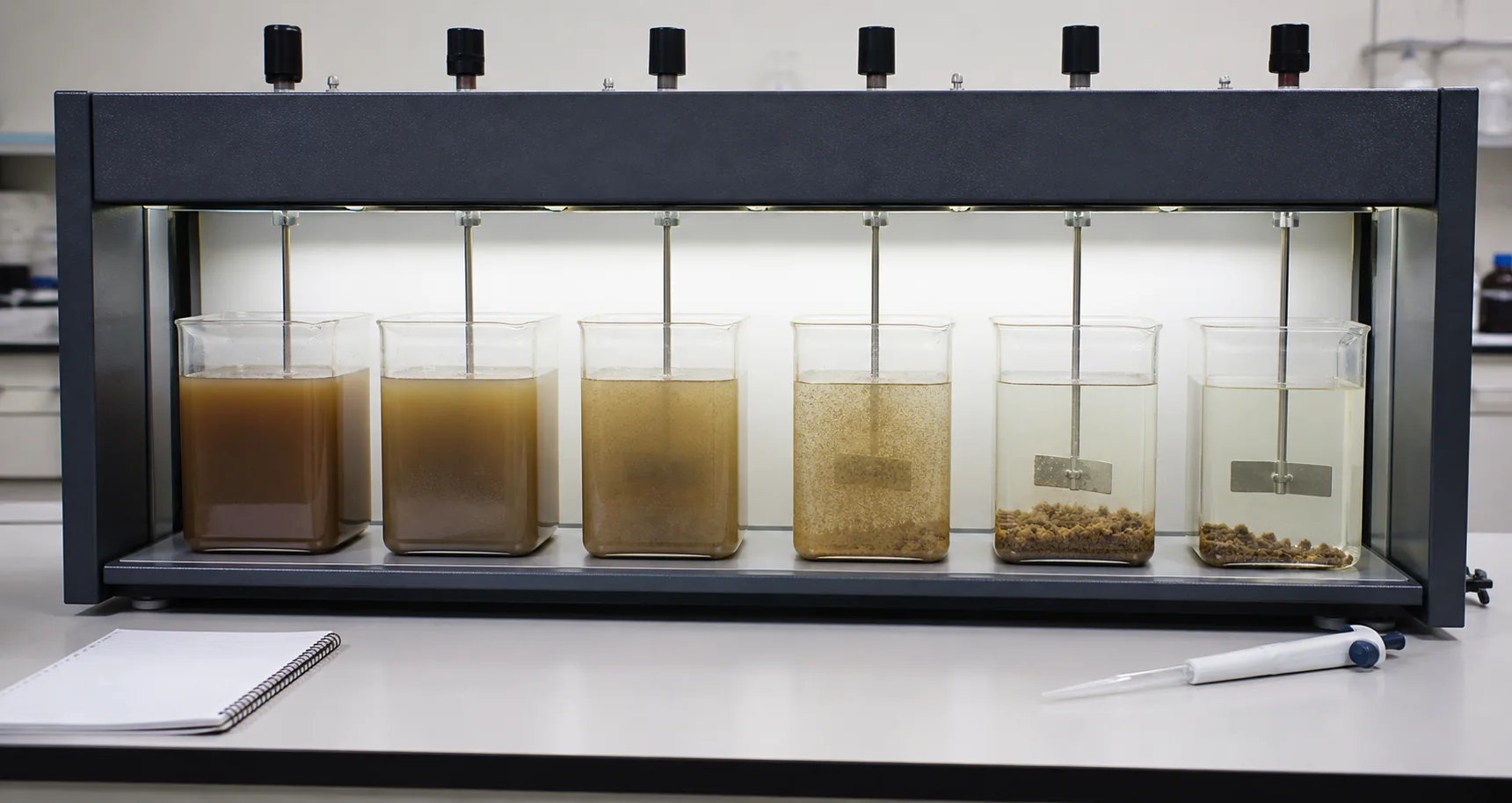
Establish a practical primary-coagulation condition before bracketing anionic candidates. Keep the incumbent and a no-polymer reference where appropriate. The jar-test record provides the common timing and dosing controls.
Do not allow an uncontrolled pH shift to masquerade as a new flocculant advantage.
Approve the downstream consequences
For clarification, measure fines carryover and sludge handling; for DAF, evaluate flotation and skimming. Record active consumption and relevant filters or dewatering effects.
If the new coagulant creates substantially different residuals, repeat the downstream conditioning assessment rather than carrying the old sludge-product approval forward unchanged.
Read a conflicting trial result
A new pair of chemicals may clear water faster while producing a larger or harder-to-handle sludge stream. Price the accepted combined process instead of awarding the polymer from a clear beaker alone.
Repeat the reference and leading conditions when differences are close to sampling or measurement variability. Keep untested conditions visible in the qualification rather than extending one favorable observation.
Agree the acceptance record
| Buying check | Evidence | Acceptance |
|---|---|---|
| Primary step | pH, chemistry and reaction state | Comparable microfloc |
| Polymer | Coded response curve | Bridging requirement tested |
| Plant | Liquid plus residuals results | Whole duty accepted |
Retain the coded sample, preparation, active basis and measurement timing. Preserve failed conditions alongside the accepted range so later deliveries can be compared with the actual evidence.
Request the relevant sample or offer
Send old and proposed chemical programs, water data, mixing and separator results. Request a focused requalification with the accepted sequence and any changed residuals duties recorded.
Send the flocculant sample and quotation request and review product and supply requirements with Gongyi Xinqi Polymer Co., Ltd.. Confirm the offered identity, documents and commercial scope before ordering.