
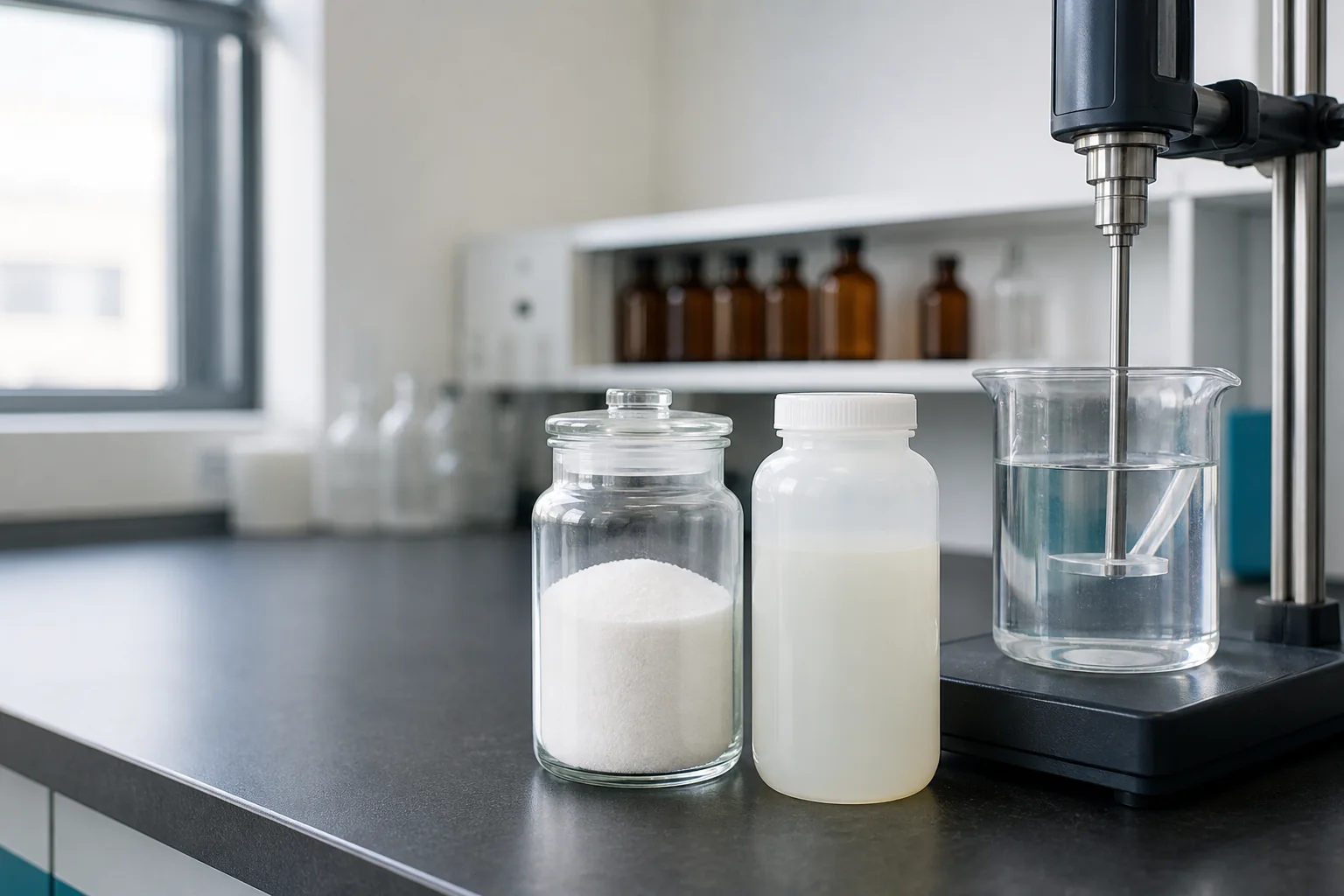
Define the separation duty
State the wastewater source, mineral solids, hydroxide precipitates and coagulant-aid service, separator and downstream process before comparing polymers.
The same wastewater treatment flocculant can behave differently in settling, flotation and dewatering equipment.
Preserve a representative sample
Record sampling point, production state, pH, temperature, suspended solids, oil or target contaminant and upstream chemicals.
Mix the bulk sample consistently before splitting tests; do not substitute clean water for process wastewater.
Screen charge and product form
Compare coded candidates across plausible ionic profiles, molecular ranges and powder or emulsion forms.
Supplier labels are a starting point; measured application response controls the selection.
Normalize preparation and dose
Keep active basis, stock concentration, aging, addition order and matched hydration time consistent for every candidate.
Unequal make-down can make a suitable polymer appear weak or an overdosed product appear strong.
Measure the complete result
Track settling or flotation rate, supernatant clarity and sludge volume, floc strength, separation rate, treated-water quality and sludge consequences.
A large visible floc is not sufficient if it breaks in the installed equipment or worsens downstream handling.
Release a bounded operating window
Link product code, lot, wastewater condition, dose basis, mixing, measurements, COA, SDS, packaging and quotation.
Revalidate after meaningful wastewater, equipment, preparation or supplied-product changes.