Specify the purchase duty
Ceramic washing and glaze-related wastewater can carry different mineral particles and process chemicals. A purchase brief should identify the particular stream and separate particle removal from any dissolved-contaminant requirement. A flocculant sample result should not be turned into an unsupported complete-treatment guarantee.
Keep the wastewater source, supplied product identity and required separation result together. An application name narrows the enquiry but does not establish a universal grade or dose.
Describe the source batches
Distinguish clay or body washing, glaze preparation, cleaning and combined treatment. Record suspended solids, pH, conductivity and known additives relevant to the process. State sample age and any settling before testing.
A lightly loaded cleaning sample may not represent the concentrated fines or glaze campaign that limits routine operation.
Reproduce the treatment chemistry
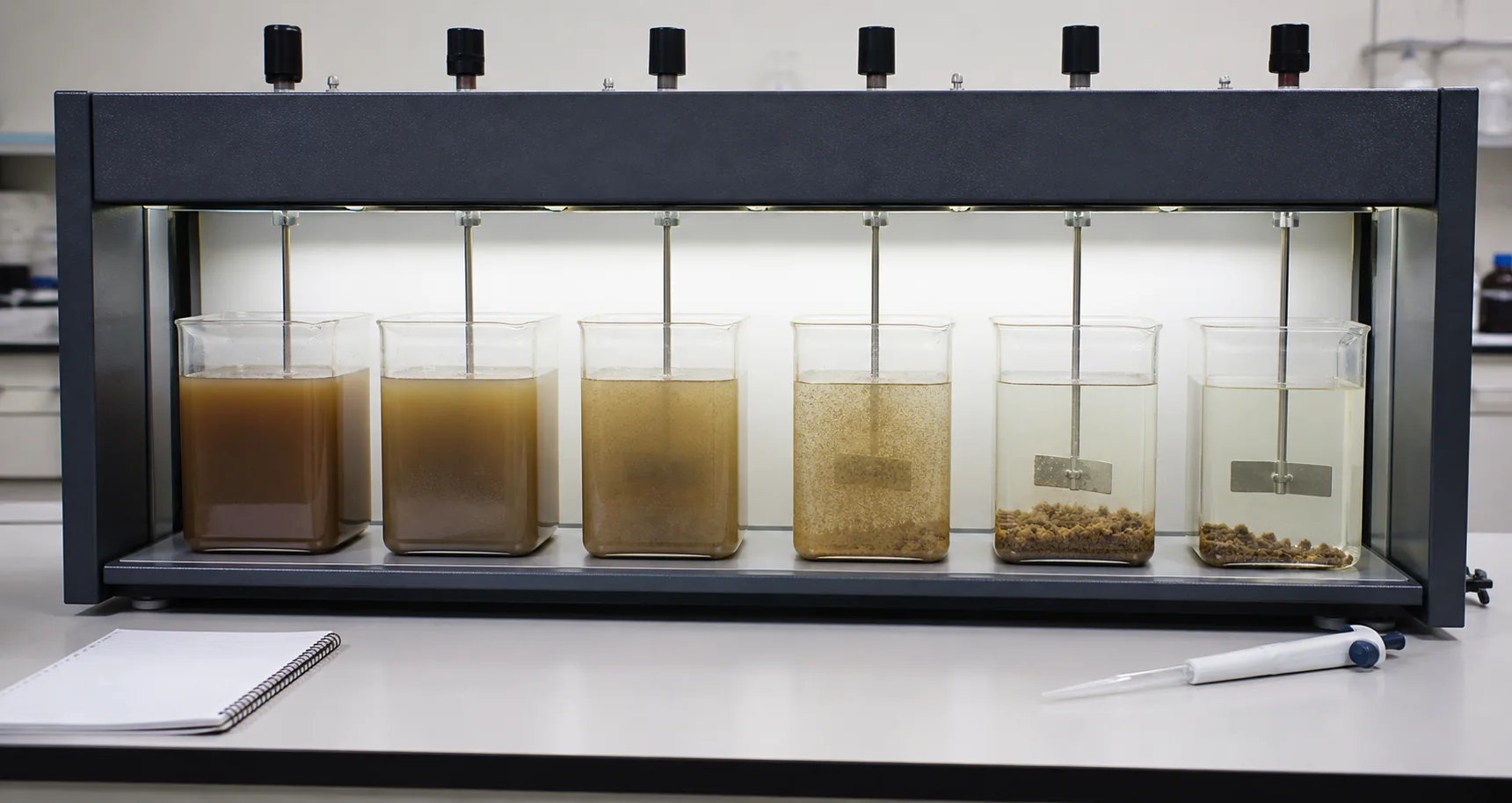
Document pH adjustment, primary coagulant and mixing before comparing coded polymer profiles. Include a justified low-charge option when the matrix warrants it rather than selecting from a material name alone.
The selection record frames the family screen without assuming every mineral suspension responds identically.
Define both output responsibilities
Compare clarified-water solids, relevant downstream filtration and sludge withdrawal or dewatering. Where metals or other controlled constituents matter, preserve the appropriate analytical fractions and site review.
Clear water is not proof of acceptable dissolved-metal concentration or unrestricted sludge disposal. Those requirements need their own verified evidence.
Read a conflicting trial result
If settling improves but fine carryover remains or the sludge cannot be filtered consistently, the candidate has not passed the complete ceramic-effluent duty. Preserve the failed endpoint in the offer comparison.
Repeat the reference and leading conditions when differences are close to sampling or measurement variability. Keep untested conditions visible in the qualification rather than extending one favorable observation.
Agree the acceptance record
| Buying check | Evidence | Acceptance |
|---|---|---|
| Source | Batch and particle history | Representative feed |
| Chemistry | pH and coagulant sequence | Comparable treatment |
| Release | Liquid plus sludge evidence | Correct acceptance scope |
Retain the coded sample, preparation, active basis and measurement timing. Preserve failed conditions alongside the accepted range so later deliveries can be compared with the actual evidence.
Request the relevant sample or offer
Send source-stream details, analysis, chemical sequence, separator and sludge route. Request a coded trial with the specific solids and downstream acceptance conditions recorded.
Send the flocculant sample and quotation request and review product and supply requirements with Gongyi Xinqi Polymer Co., Ltd.. Confirm the offered identity, documents and commercial scope before ordering.