
Specify the purchase duty
Higher cationic charge is not an automatic upgrade. Charge density can change adsorption and conditioning, but sludge origin, dissolved chemistry and mechanical duty determine the useful result. Ask why each proposed charge position belongs in the purchasing screen instead of ordering the highest label.
Keep the wastewater source, supplied product identity and required separation result together. An application name narrows the enquiry but does not establish a universal grade or dose.
Describe the charge-demand context
Provide sludge origin, feed solids, storage, pH, conductivity and relevant upstream coagulants. Distinguish thickened biological material from inorganic or mixed residuals. Preserve the current accepted product and its operating limitation.
The charge-family comparison separates a screening hypothesis from a qualified machine result.
Compare an interpretable bracket
Ask for coded adjacent profiles with documented active basis and preparation. Supplier low, medium and high categories may not use identical methods, so avoid pretending the labels are a precise common numerical scale.
Hold sample condition and dosing accuracy consistent, then compare a complete response curve rather than one selected point.
Select the maintainable result
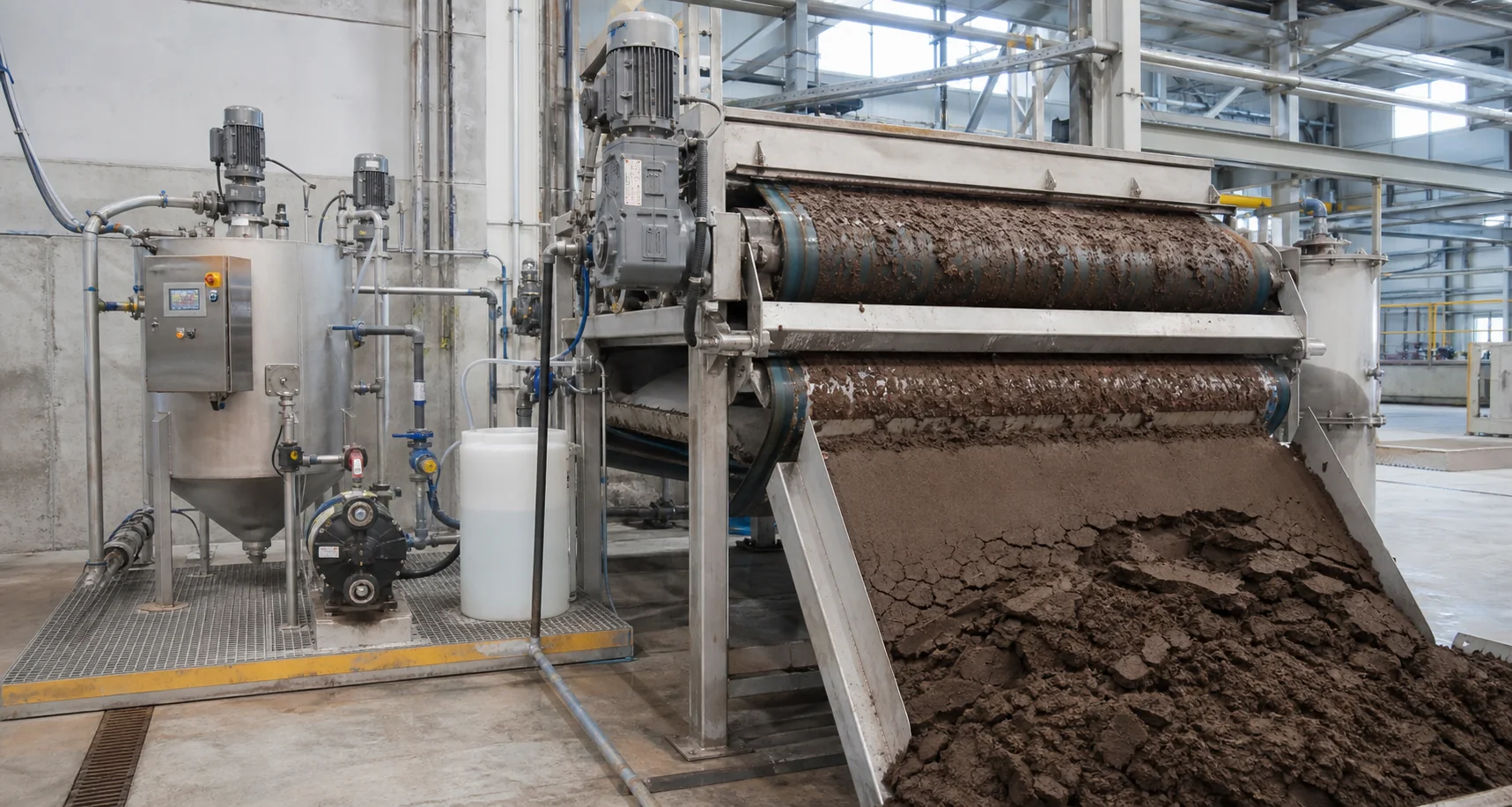
Observe drainage, capture, cake or float handling and relevant shear. Carry leading conditions through the actual separator and compare the width of the acceptable dose range.
An attractive high-charge optimum that becomes sticky or loses capture after a small feed change may be less useful than a broader operating plateau.
Read a conflicting trial result
If a higher-charge sample drains faster but gives dirtier filtrate, the result is mixed. Preserve both observations and test the practical dose range before approving a higher-priced grade as superior.
Repeat the reference and leading conditions when differences are close to sampling or measurement variability. Keep untested conditions visible in the qualification rather than extending one favorable observation.
Agree the acceptance record
| Buying check | Evidence | Acceptance |
|---|---|---|
| Sludge | Origin, storage and chemistry | Demand represented |
| Bracket | Codes and profile rationale | Charge claim tested |
| Machine | Capture and usable dose range | Stable operation |
Retain the coded sample, preparation, active basis and measurement timing. Preserve failed conditions alongside the accepted range so later deliveries can be compared with the actual evidence.
Request the relevant sample or offer
Send current sludge data, product identity, equipment and the unresolved endpoint. Request a justified charge bracket and commercial-code mapping for candidates advanced to plant confirmation.
Send the flocculant sample and quotation request and review product and supply requirements with Gongyi Xinqi Polymer Co., Ltd.. Confirm the offered identity, documents and commercial scope before ordering.