
Specify the purchase duty
Industrial laundry effluent can vary with the material washed, detergent program and cycle discharge. The purchasing question is whether a candidate can separate the relevant suspended or conditioned material through the installed process. Surfactant-rich water should not be treated as a generic clean-water polymer test.
Keep the wastewater source, supplied product identity and required separation result together. An application name narrows the enquiry but does not establish a universal grade or dose.
Identify the relevant wash states
Record wash schedules, wastewater temperature, pH, conductivity, suspended material and relevant oils or soils. Describe the equalization and upstream chemical arrangement and note difficult cycle discharges.
A cooled stored composite may not retain the same dispersion or separation behavior as the feed reaching treatment.
Separate conditioning from flocculation
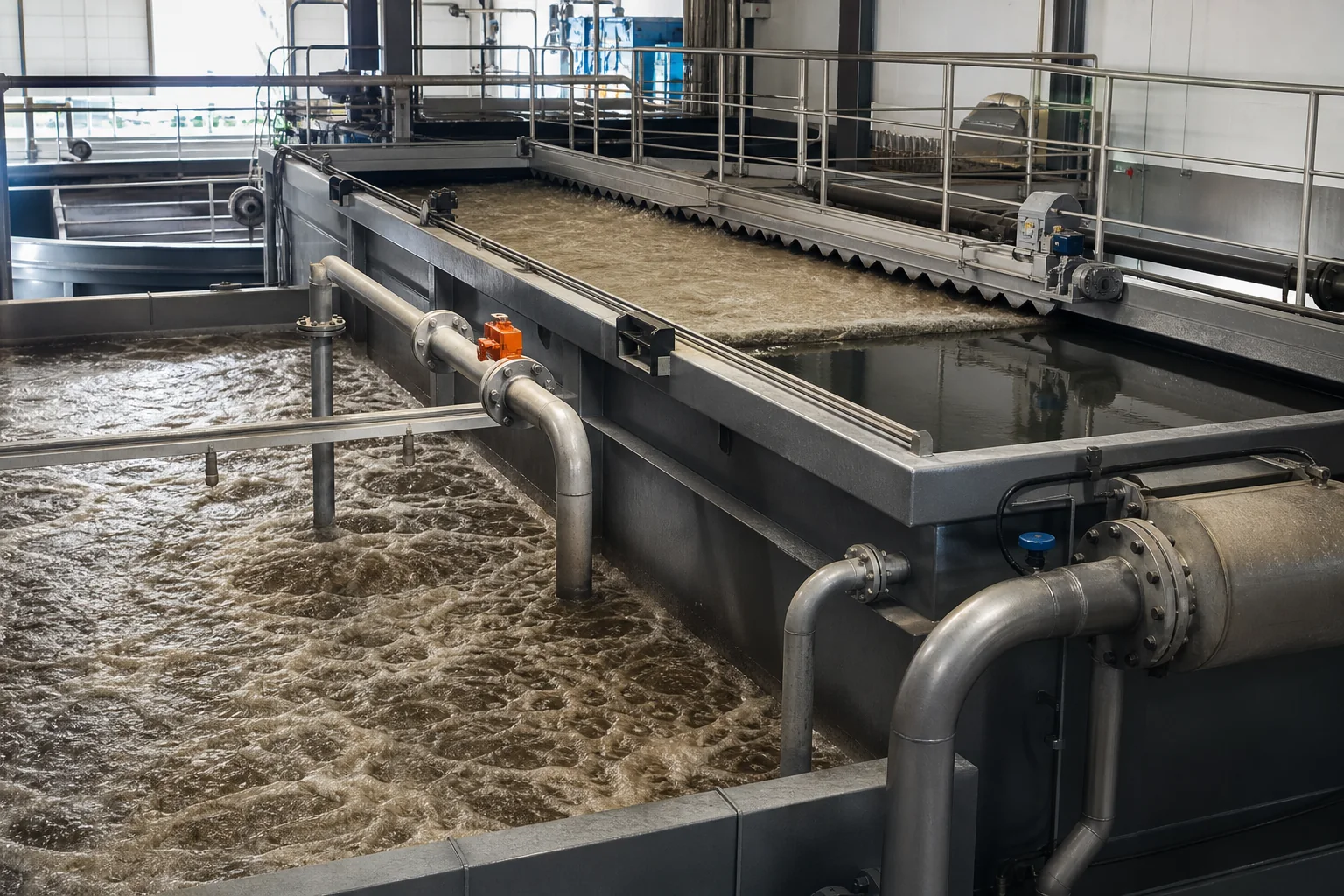
Reproduce any pH or primary-coagulant step and compare coded flocculants under controlled active addition. If the plant uses DAF, use appropriate bubble-contact or plant confirmation rather than selecting only from settling.
The DAF diagnostic record helps exclude an air or skimming problem from chemical ranking.
Approve the treated and solids streams
Measure agreed liquid quality alongside float or sludge handling and downstream consequences. Keep dissolved surfactants or organics outside a solids-removal claim unless the actual treatment train demonstrates those targets.
Define the tested wash range and the event requiring another screen. An isolated clear sample does not qualify every future detergent or incoming-load change.
Read a conflicting trial result
A candidate may form large floc but give unstable float during a detergent-rich pulse. Review the actual primary chemistry and flotation state before approving routine supply from the larger-floc observation.
Repeat the reference and leading conditions when differences are close to sampling or measurement variability. Keep untested conditions visible in the qualification rather than extending one favorable observation.
Agree the acceptance record
| Buying check | Evidence | Acceptance |
|---|---|---|
| Cycles | Chemistry and load record | Difficult states included |
| Separation | Actual settling or DAF evidence | Correct mechanism assessed |
| Range | Liquid and residuals limits | Approval practical |
Retain the coded sample, preparation, active basis and measurement timing. Preserve failed conditions alongside the accepted range so later deliveries can be compared with the actual evidence.
Request the relevant sample or offer
Send wash-cycle and treatment data, chemical sequence, separator information and accepted water and sludge results. Request an application-specific sample bracket with explicit limits.
Send the flocculant sample and quotation request and review product and supply requirements with Gongyi Xinqi Polymer Co., Ltd.. Confirm the offered identity, documents and commercial scope before ordering.