


This guide supports practical PAM selection for wastewater treatment, clarification and sludge handling. Compare polyacrylamide products, read the application guide, and request sample support for sample testing.
1. Industry Leadership & Certification
As the 2025会长单位 (Chairman Unit) of Gongyi Water Purification Materials Association, Gongyi Xinqi has established itself as the benchmark for quality and innovation in China’s water treatment sector. Beyond holding triple ISO certifications (9001 for quality management, 14001 for environmental stewardship, and 45001 for occupational safety), we are the only PAM manufacturer certified under China’s 两化融合 (Industrial-Information Integration) management system – a testament to our digitalized production control. Our client portfolio spans state-owned enterprises (China Energy Construction, China Gold) and multinational corporations, with exports to 15+ countries across North America (US, Mexico), South America (Brazil, Chile), and Southeast Asia. Through our strategically located decentralized warehouses in Shanghai, Guangzhou, and Chengdu, we guarantee 48-hour domestic delivery with real-time logistics tracking via blockchain-enabled supply chain platforms.
2. Cutting-Edge Product Portfolio
Ionic Versatility: Our molecular engineering capabilities allow precise customization of cationic (DAC-modified with quaternary ammonium groups), anionic (sodium acrylate copolymer with adjustable carboxyl density), and non-ionic (polyacrylamide homopolymer) formulations. In copper mining wastewater treatment trials, our 15-million Da anionic PAM achieved 98% turbidity removal at just 2 ppm dosage, outperforming industry benchmarks by 22%.
Eco-innovation: The patented EcoPAM® series incorporates hydrolyzable ester linkages into polymer chains, demonstrating 90% biodegradation within 180 days under OECD 301B standards. Third-party ecotoxicity tests show 50% lower inhibition effect on Vibrio fischeri luminescence compared to conventional PAMs.
Nanotechnology: Our microfluidization process produces PAM nanoparticles (80-150 nm) with controlled surface charge. Field applications in Daqing Oilfield’s low-permeability reservoirs (permeability <50 mD) show 18% enhanced oil recovery through viscoelastic flow diversion, validated by microfluidic chip simulations at Tsinghua University.
3. Technical Superiority
Synthesis Process: The oxygen-free continuous polymerization system utilizes ammonium persulfate/TMEDA redox initiators under precisely controlled temperature gradients (35-50°C ±0.5°C), achieving 15 million Da molecular weights with polydispersity index <1.8. Compared to traditional batch reactors, our tubular reactor design reduces energy consumption by 30% through heat recovery technology.
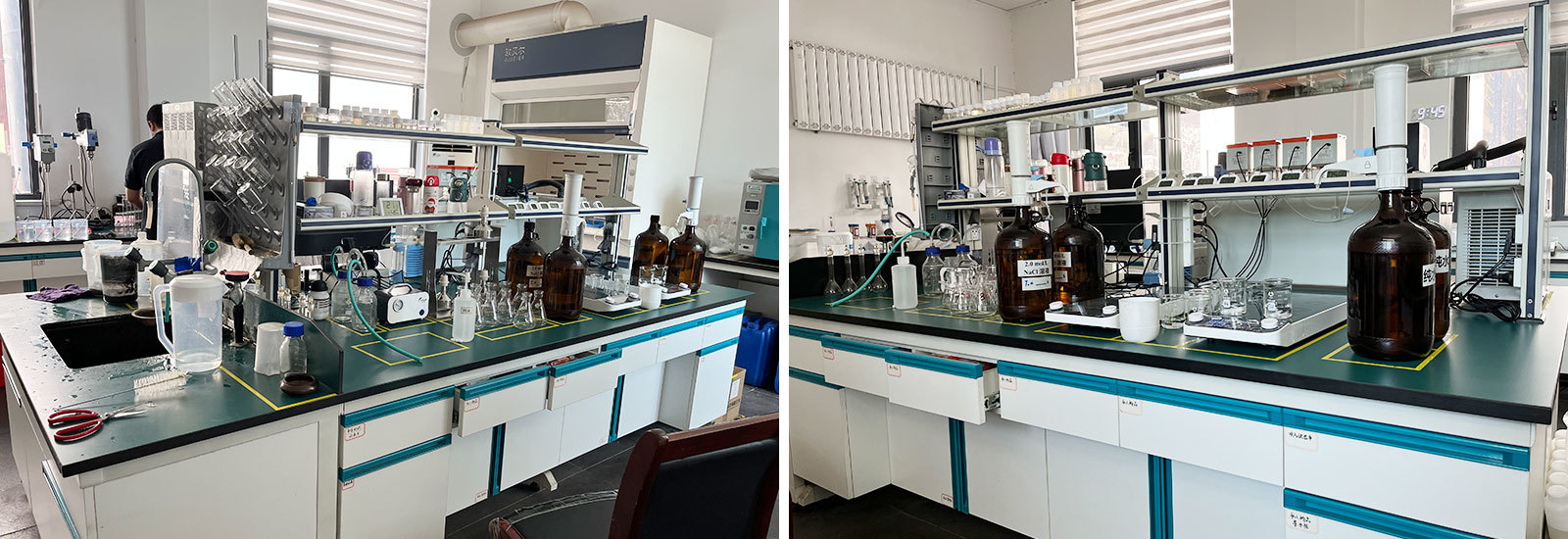
Quality Control: Advanced process analytical technology (PAT) includes real-time viscosity monitoring via Haake RheoStress 6000 rheometers and molecular weight distribution analysis through GPC-MALLS (Wyatt Technology DAWN HELEOS II). Our strict monomer conversion control ensures residual acrylamide levels consistently below 0.3%, meeting stringent EU REACH and NSF/ANSI 60 standards for drinking water applications.
4. Integrated Service Model
Launched in Q2 2024, our Technical Service Team comprises 12 PhD-level engineers specializing in wastewater chemistry. Key offerings include:
Dosing Optimization: AI-powered simulation models for specific wastewater matrices (e.g., 40% charge density cationic PAM for textile dyeing sludge with 8,000-12,000 mg/L COD)
Training Programs: Certified operator courses covering PAM dissolution techniques (recommended 0.1-0.3% solution concentration), injection pump maintenance, and flocculation observation methods
Lifecycle Management: From pilot-scale testing (50-100 L/hr systems) to full-scale deployment (5,000 m³/day plants), including environmental impact assessment and disposal guidance.
5. Market Validation
Heavy Industry Applications: At Shanxi Jincheng Anthracite Mining Group, our high-molecular-weight anionic PAM reduced sludge volumes by 60% versus conventional PAC+alum systems, cutting disposal costs by ¥120/ton.
Advanced Treatment: The PAM-hydrogel hybrid technology (jointly developed with Zhejiang University) combines quaternary ammonium functional groups with macroporous structures, achieving 95% ammonia nitrogen removal in moving bed biofilm reactors (MBBRs) at 2-hour hydraulic retention time.
Global Recognition: Recent collaborations include a UNESCO-funded project for arsenic removal in Bangladesh groundwater using our iron oxide-loaded PAM composites, demonstrating >99% As(III) adsorption capacity at pH 6.5-7.5.
Request Sample Testing and Technical Support
Send your wastewater or sludge source, treatment process, equipment type, and target result. Xinqi Polymer can recommend cationic, anionic, or nonionic polyacrylamide grades for real water testing.